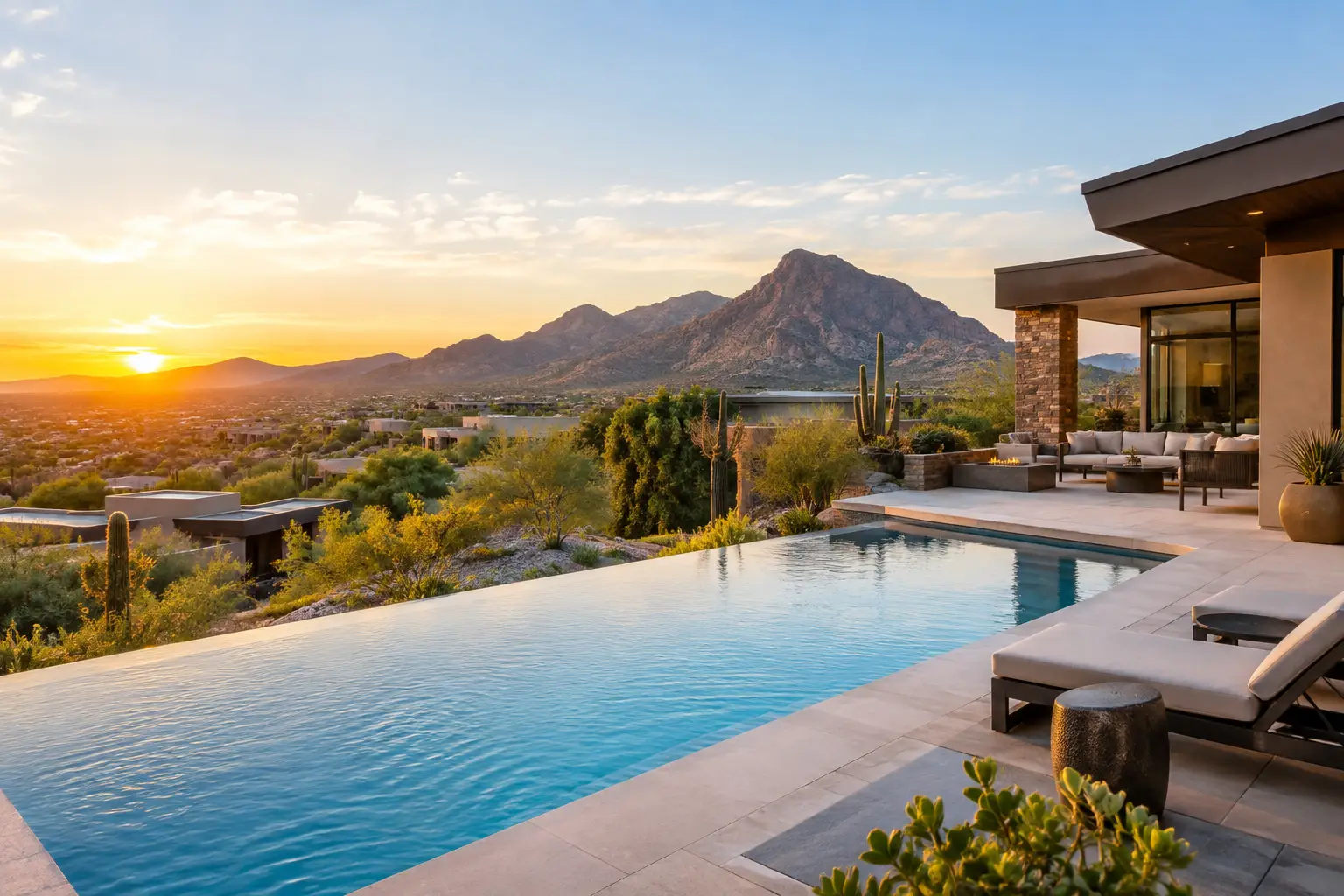
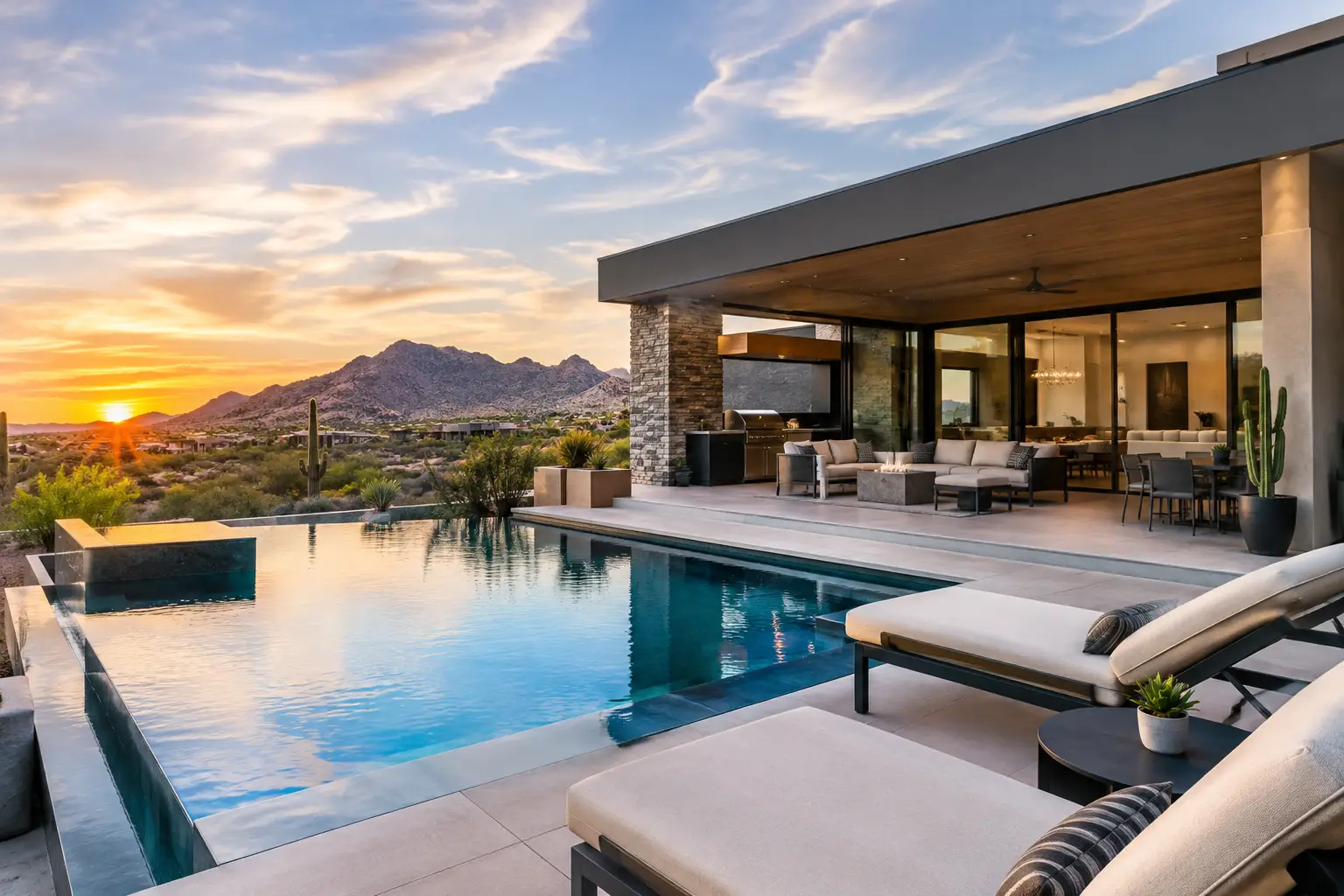
A new home in Scottsdale can offer something resale homes rarely do: the ability to shape the property around the way you actually live. That may mean a larger indoor-outdoor entertaining area, a temperature-controlled garage for collector vehicles, a private guest casita, or finishes selected to complement a favorite art collection. Yet a luxury new-build purchase is not simply a matter of choosing a floor plan and waiting for keys. This Scottsdale new construction guide explains where thoughtful due diligence matters most.
For buyers considering communities from Silverleaf and DC Ranch to Troon, Desert Highlands, and North Scottsdale’s newer enclaves, the right opportunity often comes down to a series of connected decisions. The lot influences the home. The builder’s contract influences your flexibility. The design process affects both budget and long-term appeal. Careful advice early in the process can protect options that are difficult, or expensive, to recover later.
Start With the Lot, Not the Model Home
A professionally staged model is designed to create an emotional response. It can be useful for understanding a builder’s style, craftsmanship, and typical room proportions, but it is not the home you are buying. The lot deserves at least as much attention as the plan.
In Scottsdale, a premium homesite may command its value through city lights, mountain views, golf frontage, natural open space, or greater separation from neighboring homes. Each advantage comes with questions. A view lot may have a more complex grade condition. Golf frontage can provide beautiful open sightlines but may also bring activity, maintenance patterns, and ball-strike exposure. A wash-adjacent property can feel especially private while carrying drainage, landscape, and building-envelope considerations.
Visit the lot more than once if possible. See it in the morning and late afternoon. Consider the position of the sun, especially across patios, pools, and glass walls. Ask what is planned for surrounding parcels, including future homes, roads, trail connections, or commercial development beyond the immediate gate. For a significant purchase, a site survey and a close review of recorded easements, setbacks, and view restrictions are prudent steps.
Community Rules Shape the Final Home
In luxury master-planned communities, architectural review committees often protect the visual quality and property values that attracted buyers in the first place. They may also regulate building height, exterior materials, rooflines, wall locations, landscape design, lighting, and construction activity.
These standards are not inherently a limitation. In many cases, they are part of the value proposition. Still, buyers should understand them before assuming a particular pool pavilion, detached garage, sport court, or exterior finish will be approved. A custom home site may provide more latitude than a production-builder neighborhood, but it can also require more coordination and a longer approval timeline.
Choose the Right Kind of New Construction
Not all new construction follows the same path. The best fit depends on your timeline, desire for personalization, and willingness to manage decisions.
A quick-delivery or spec home is already under construction or recently completed. It can be an attractive choice for a buyer relocating on a defined schedule, particularly when it includes a desirable lot and a polished finish package. The trade-off is less control over architectural and design selections. Some spec homes are exceptionally well executed, while others require buyers to accept choices they would not have made themselves.
A semi-custom home usually begins with an established plan that can be tailored through approved structural options and a design studio process. This approach can balance personalization with a more predictable build process. Be clear about what is truly customizable. Moving a wall, enlarging a window, changing ceiling treatments, or redesigning outdoor living areas may fall outside the standard option menu.
A fully custom home offers the greatest creative control and is often the right route for an estate-scale property, an unusual site, or a highly specific lifestyle program. It also demands the most disciplined planning. The architect, builder, landscape architect, interior designer, and community review process must work in concert. Custom does not automatically mean better. It means the outcome depends more directly on the quality of the team and the clarity of the owner’s decisions.
Read the Builder Contract Before You Commit
Builder contracts are typically written to manage the builder’s risk. They differ materially from the purchase contracts commonly used for resale homes, particularly around deposits, deadlines, design changes, construction delays, warranties, and remedies if a party does not perform.
The deposit schedule deserves close attention. A buyer may make an initial earnest money deposit, followed by additional payments after design selections, construction milestones, or other contract events. Understand whether each deposit is refundable, what conditions could cause it to be retained, and where funds are held.
Completion dates also require perspective. A projected closing date is often an estimate rather than a guarantee. Material availability, municipal approvals, labor scheduling, weather, and design changes can all affect construction. If timing matters because of a sale, school calendar, tax planning, or relocation, build a realistic cushion into your plans.
Before signing, have the contract reviewed by qualified legal counsel and work with an experienced real estate advisor who can help identify practical concerns. Representation matters even when a builder has an on-site sales professional. The sales representative can be knowledgeable and helpful, but their role is to represent the builder’s interests. Your advisor represents yours.
Budget Beyond the Base Price
The advertised base price is a starting point, not a complete financial picture. Luxury buyers are often surprised less by any single upgrade than by the cumulative effect of many reasonable selections.
A kitchen appliance package, upgraded cabinetry, wide-plank flooring, additional electrical capacity, automated shades, enhanced insulation, wine storage, and expanded sliding glass doors can materially change the final investment. Outdoor improvements deserve equal attention. Pools, spas, fire features, landscape lighting, shade structures, turf, mature plant material, and outdoor kitchens may be excluded from the builder’s price or carried as preliminary allowances.
Ask for a clear accounting of included features, available upgrades, allowance amounts, and items left for the buyer to complete after closing. Also account for window treatments, furnishings, audiovisual systems, security, landscaping, and possible membership fees where applicable. The goal is not to avoid upgrades. It is to make choices with a full view of the finished home’s cost.
Protect Resale Appeal While Personalizing
Your home should reflect your taste, but ultra-specific selections can narrow the resale audience. A distinctive media room, an elaborate hobby suite, or an unconventional color palette may be exactly right for your family. The question is whether the modification can be adapted easily if your plans change.
In premier Scottsdale communities, enduring value tends to come from excellent site orientation, thoughtful scale, strong indoor-outdoor connections, quality materials, and a floor plan that works for both daily living and entertaining. Those fundamentals usually matter more than the trend of the moment.
Inspections Are Still Essential
A new home should be inspected. Municipal inspections confirm compliance with applicable building codes, but they do not replace an independent inspection conducted for the buyer. A qualified inspector can identify installation concerns, incomplete work, drainage issues, mechanical adjustments, roof details, and cosmetic items that deserve correction before closing.
For a home built in phases, it can be helpful to inspect at more than one point, including before drywall when feasible and again near completion. A final walkthrough should be deliberate rather than ceremonial. Test appliances, plumbing fixtures, doors, windows, lighting, heating and cooling zones, smart-home controls, pool equipment, and garage systems. Document outstanding items in writing and understand the builder’s process for addressing them.
Warranties should be reviewed with the same care. Learn what is covered, for how long, whether service requests must be submitted through a portal, and which maintenance obligations remain with the homeowner. Keep records of all manuals, selections, warranties, and correspondence from the outset.
Plan for the Closing and the First Year
The closing process for new construction can move quickly once the builder issues a completion notice. Coordinate financing well in advance, even if you expect to pay cash, and confirm insurance requirements early. If the home is in a homeowners association, review the governing documents, transfer fees, reserve information, and rules affecting rentals, landscaping, parking, or future improvements.
The first year is when a home settles into use. Minor adjustments are normal as systems operate through a full Arizona summer and winter cycle. Maintain a running, organized list of warranty items rather than relying on memory. Respect scheduled service intervals for HVAC equipment, pool systems, irrigation, and roof care. This approach protects both comfort and the long-term presentation of the property.
A well-chosen new home can be a deeply personal expression of place, privacy, and lifestyle. Give yourself room to evaluate the site, the contract, the total investment, and the team behind the build. With calm guidance and the right questions before the first deposit, you can move toward closing with greater confidence and enjoy the home for the reasons you chose it in the first place.